Forklift Fleet Electrification with Lithium Batteries for Higher Uptime and ROI

Discover how forklift fleet electrification with lithium batteries boosts uptime cuts costs and maximizes ROI for multi shift operations
Running multi‑shift forklift operations and still fighting downtime, battery swaps, and rising fuel costs?
Then forklift fleet electrification with lithium-ion forklift batteries is exactly where you should be looking.
Across warehouses, 3PLs, and manufacturing plants, leaders are moving from IC engines and lead-acid forklift batteries to lithium because the math is hard to ignore:
more uptime, fewer interruptions, and a dramatically better ROI over the life of the equipment.
In this guide, you’ll see how switching to lithium-ion forklift batteries can:
- Eliminate most battery-related downtime
- Unlock true opportunity charging for continuous, multi-shift work
- Cut your total cost of ownership while supporting zero-emission goals
You’ll also see how a specialist partner like XICHA Battery helps you electrify your fleet with the right chemistry, charging strategy, and support—without disrupting daily operations.
Why Electrify Your Forklift Fleet Now?
If you’re running a busy warehouse or distribution center, you’re probably asking the same questions I hear everywhere:
How do I keep forklifts running across all shifts, cut costs, and still hit sustainability and compliance targets? That’s exactly where forklift fleet electrification with lithium-ion forklift batteries changes the game.
Electrification Trends in Material Handling
Material handling is moving fast toward full electrification:
- Major OEMs now prioritize electric vs internal combustion forklifts in new launches
- Global brands are setting hard deadlines to phase out diesel and LPG trucks in warehouses
- Multi-site operations are standardizing on electric forklift fleet transition to simplify energy, maintenance, and training
In short: electric forklifts are no longer a niche option—they’re becoming the default.
Key Drivers: Regulations, Sustainability, Operating Costs
Fleet managers aren’t electrifying “for the hype.” The pressure is real and measurable:
- Zero-emission forklift regulations
- Stricter indoor air quality rules
- CO₂ reduction mandates from customers and governments
- Sustainability and ESG targets
- Need to prove forklift fleet sustainability with real data
- Corporate reporting on emissions and energy use
- Operating cost pressure
- Fuel costs are volatile and rising
- Lead-acid battery rooms eat square footage and labor
- Downtime penalties and missed SLAs keep getting more expensive
Electrification with lithium-ion forklift batteries tackles all three: compliance, sustainability, and cost.
Pain Points with Internal Combustion and Lead-Acid Fleets
If your fleet is still heavy on IC engines or lead-acid, you’re likely dealing with:
- High maintenance
- Engine oil changes, filters, exhaust systems, cooling issues
- Lead-acid watering, cleaning, equalization, acid spills
- Forklift downtime and inefficiency
- Battery swaps every shift
- Trucks parked waiting for charged batteries
- Performance drop as lead-acid batteries discharge
- Hidden costs
- Ventilated charging rooms and safety systems
- Spare batteries and swap equipment
- Extra trucks to cover for low-uptime units
These are exactly the areas where lithium battery maintenance-free technology delivers immediate forklift downtime reduction and maintenance cost reduction for forklifts.
How Electrification Supports Multi-Shift Operations
For multi-shift forklift operations, uptime is everything. This is where material handling electrification with lithium truly pays off:
- Fast charging and opportunity charging forklifts
- Charge during breaks, shift changes, or lunch
- No need for battery swaps or long overnight charges
- Consistent performance across shifts
- Stable voltage and lift speed until the end of the shift
- Better forklift energy efficiency improvements under heavy loads
- Optimized fleet size
- Higher uptime per truck means fewer units needed
- Direct impact on forklift fleet total cost of ownership
By moving to a forklift fleet electrification strategy centered on lithium-ion forklift batteries, you’re not just checking a sustainability box—you’re increasing uptime, stabilizing costs, and building a fleet that actually keeps up with your operation’s growth.
Lead-Acid vs. Lithium-Ion Forklift Batteries
When we talk forklift fleet electrification, the real turning point is moving from lead-acid to lithium-ion. The difference in uptime, cost, and daily operations is massive.
Power and Runtime Performance
Lithium-ion forklift batteries deliver strong, consistent power from the start of the shift to the end. Lead-acid drops voltage as the battery discharges, so:
- Lift speed slows down
- Travel speed drops
- Operators lose productivity in the last hours of a shift
With lithium-ion forklift batteries, you get:
- Stable voltage and lift speed
- Better performance in multi-shift forklift operations
- Higher pallets-per-hour output, especially in high-demand warehouses
Charging Speed and Opportunity Charging
Lead-acid needs long, full charge cycles and cool-down time. That kills flexibility in busy operations.
Lithium changes the game:
- Fast charging: often 1–2 hours vs. 8+ hours for lead-acid
- Opportunity charging forklifts: plug in during breaks, shift changes, or lunch
- No need to run batteries down to 20% before charging
This is why most modern electric vs internal combustion forklifts setups are moving straight to lithium. You design the fleet around quick, smart charging instead of battery swaps.
Maintenance-Free vs. High Upkeep
Lead-acid batteries bring hidden labor costs:
- Regular watering
- Equalization charging
- Corrosion checks and cleaning
- Ventilation requirements from gassing
Lithium-ion forklift batteries are maintenance-free:
- No watering
- No acid spills
- No off-gassing
- Less PPE and safety administration
That’s direct maintenance cost reduction for forklifts and fewer headaches for your team.
Battery Lifespan and Replacement Cycles
Lead-acid batteries usually reach around 1,200–1,500 cycles (often less in heavy or abusive use). In multi-shift sites, that can mean replacement every 3–5 years—and often you need 2–3 lead-acid batteries per truck.
Quality lithium-ion forklift batteries typically offer:
- 3,000–4,000+ cycles
- 1 battery per truck for the full life of the forklift in many cases
- Lower long-term forklift fleet total cost of ownership
You pay more upfront, but you remove multiple replacement sets over the life of the equipment.
Space, Infrastructure, and Charging Room Optimization
Lead-acid fleets need:
- Dedicated battery rooms
- Racks for spare batteries
- Ventilation and safety systems
- Heavy battery handling equipment
Lithium frees up that space:
- No battery room in many operations
- Simple wall-mounted chargers at charging points
- More warehouse space for storage, production, or staging
- Lower installation and safety infrastructure costs
If you’re planning a new warehouse or upgrading your fleet, designing around compact lithium forklift charging infrastructure is a major win. For example, you can pair modern trucks with 24V or 36V lithium forklift batteries that fit existing battery compartments while cutting space and handling needs—solutions like our 24V forklift batteries and 36V forklift batteries are built specifically for that.
In short: for uptime, safety, and long-term ROI, lithium-ion wins clearly over lead-acid in almost every multi-shift, high-usage forklift operation.
How Lithium Forklift Batteries Maximize Uptime
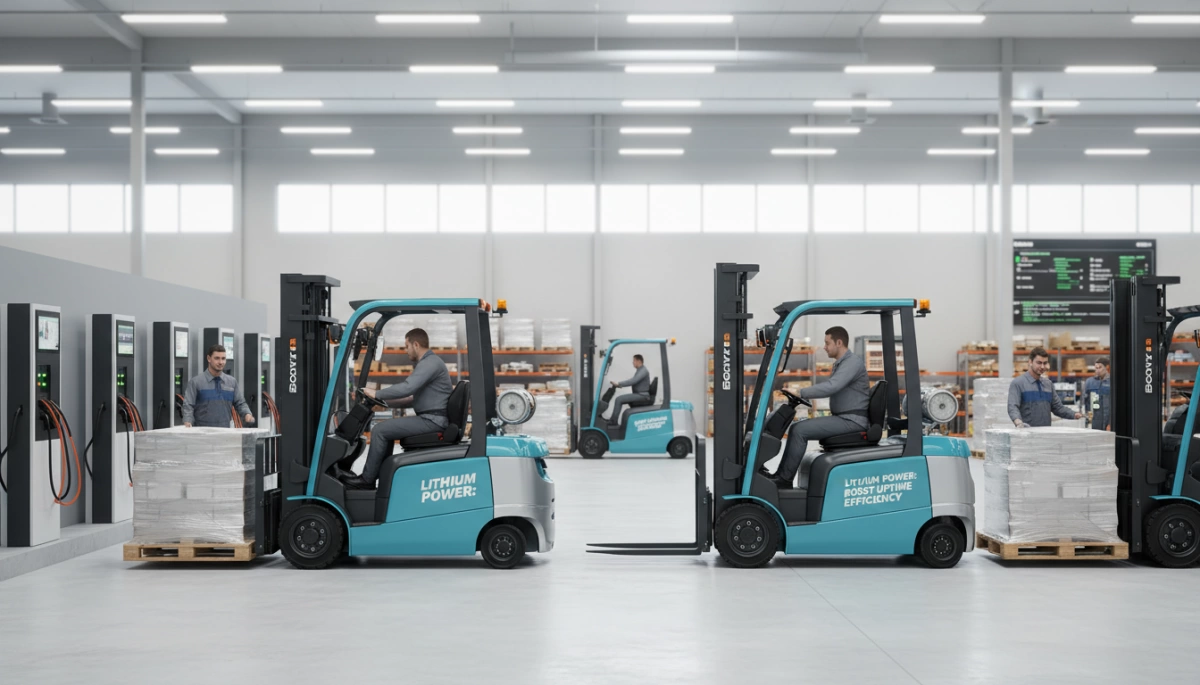
Lithium-ion forklift batteries are the fastest way to boost uptime in a busy warehouse or 3PL operation. Instead of pulling trucks out of service for battery swaps and long charge cycles, you keep them moving.
Eliminating Battery Swaps and Long Charge Cycles
With lithium, each truck runs on a single battery for its whole life. No more:
- Battery swap rooms
- Spare batteries per truck
- 6–8 hour lead-acid charge + cool-down windows
High‑capacity 48V lithium forklift batteries and 80V lithium packs can be fast charged during natural breaks, so your operators stay on the floor, not waiting at the battery room. For high‑duty trucks, pairing trucks with the right 48V forklift batteries or 80V forklift batteries keeps performance strong without swap stations.
Opportunity Charging for Multi-Shift Operations
Lithium is built for opportunity charging forklifts:
- Top up during breaks, shift changes, or loading delays
- 10–20 minutes on a compatible forklift battery charger can add hours of runtime
- Perfect for multi-shift forklift operations where trucks rarely stop
Instead of planning around “battery days,” you just plug in whenever the truck is parked. That’s how electric fleets keep uptime high and schedules predictable.
Consistent Voltage, Lift Speed, and Productivity
Unlike lead-acid, lithium keeps voltage steady until it’s almost empty. That means:
- No sluggish acceleration at the end of the shift
- Stable lift speed for every pallet
- Operators don’t “nurse” tired trucks to the charger
Consistent power = consistent throughput. You protect forklift battery uptime and keep pallets per hour stable from the first hour of the shift to the last.
Less Downtime and Fewer Unplanned Failures
Lithium forklift batteries are maintenance-free:
- No watering, equalizing, or corrosion cleanup
- Built‑in battery management systems (BMS) protect against overcharge, deep discharge, and overheating
- Lower risk of mid‑shift breakdowns from abused or neglected batteries
That directly cuts forklift downtime, service calls, and surprise failures that disrupt loading windows and carrier schedules.
Measuring Uptime Gains in Real-World Warehouses
In practice, warehouses switching from lead‑acid to lithium typically see:
- 10–25% more truck availability per day
- Near‑elimination of swap‑related downtime
- Higher actual driving hours per shift per truck
Track it with:
- Hours‑run vs. hours‑available per forklift
- Number of battery‑related stoppages per month
- Pallets moved per truck per shift
When you measure these numbers before and after lithium, the forklift fleet uptime improvement is usually obvious within the first 3–6 months.
Forklift Lithium ROI and Total Cost of Ownership
When we talk about forklift fleet electrification, the key question is simple: does lithium actually pay off? In most multi‑shift operations, the answer is yes—and usually faster than people expect.
Upfront costs vs. long‑term savings
Lithium‑ion forklift batteries cost more upfront than lead‑acid, but the long‑term numbers usually flip in your favor because you:
- Buy fewer batteries (often 1 lithium pack per truck instead of 2–3 lead‑acid batteries)
- Cut charging losses and save on electricity with higher energy efficiency
- Eliminate battery room costs (swap equipment, ventilation, watering systems)
- Avoid maintenance labor, since lithium is basically maintenance‑free
When you factor in fleet size, shifts, and energy costs, the total cost of ownership (TCO) of lithium is usually lower over the battery’s life.
Lithium forklift ROI calculation methods
For a straightforward lithium forklift ROI calculation, I look at:
-
Current annual spend on:
- Lead‑acid batteries and replacements
- Battery maintenance labor and parts
- Charging room infrastructure and battery handling
- Downtime cost from swaps and low‑voltage issues
-
Projected lithium costs over the same period:
- Battery + charger investment
- Electricity usage with more efficient lithium chargers
- Minimal maintenance and reduced downtime
-
Compare both over 5–10 years, then calculate:
- Payback period = Initial lithium premium ÷ Annual net savings
- ROI % = (Total savings − Extra investment) ÷ Extra investment
If you’re optimizing a warehouse fleet, pairing smart batteries with efficient lithium forklift chargers is where a big chunk of savings shows up.
Key savings: energy, labor, replacement batteries
Lithium‑ion forklift batteries drive ROI in a few clear areas:
- Energy: Higher charging efficiency and opportunity charging cut waste and peak demand.
- Labor: No battery swaps, no watering, no cleaning acid spills—less unproductive time.
- Replacement batteries: 2–3x longer life and far fewer pack replacements over the truck’s life.
- Downtime: Fewer failures, consistent performance, and better uptime per shift.
This is why forklift battery uptime improvement is directly tied to financial returns.
Typical payback for multi‑shift forklift fleets
For multi‑shift forklift operations (2–3 shifts, 5–7 days a week), I typically see:
- Payback periods: About 1.5–4 years, depending on:
- Energy costs in your region
- Labor rates
- Intensity of usage and number of trucks
Higher‑intensity and 24/7 operations usually reach payback faster because they benefit more from uptime and labor savings.
Forklift fleet total cost of ownership comparison
When you compare forklift fleet total cost of ownership over 8–10 years:
- Lead‑acid looks cheaper on day one, but becomes expensive in:
- Multiple battery sets
- Maintenance and swap labor
- Infrastructure and downtime
- Lithium costs more upfront, but:
- Cuts operating and maintenance costs
- Extends battery life cycles
- Improves forklift downtime reduction and productivity
If you’re planning a long‑term electric forklift fleet transition, TCO is where lithium wins, not just on sustainability, but on hard dollars.
Productivity, Sustainability, and Compliance Benefits
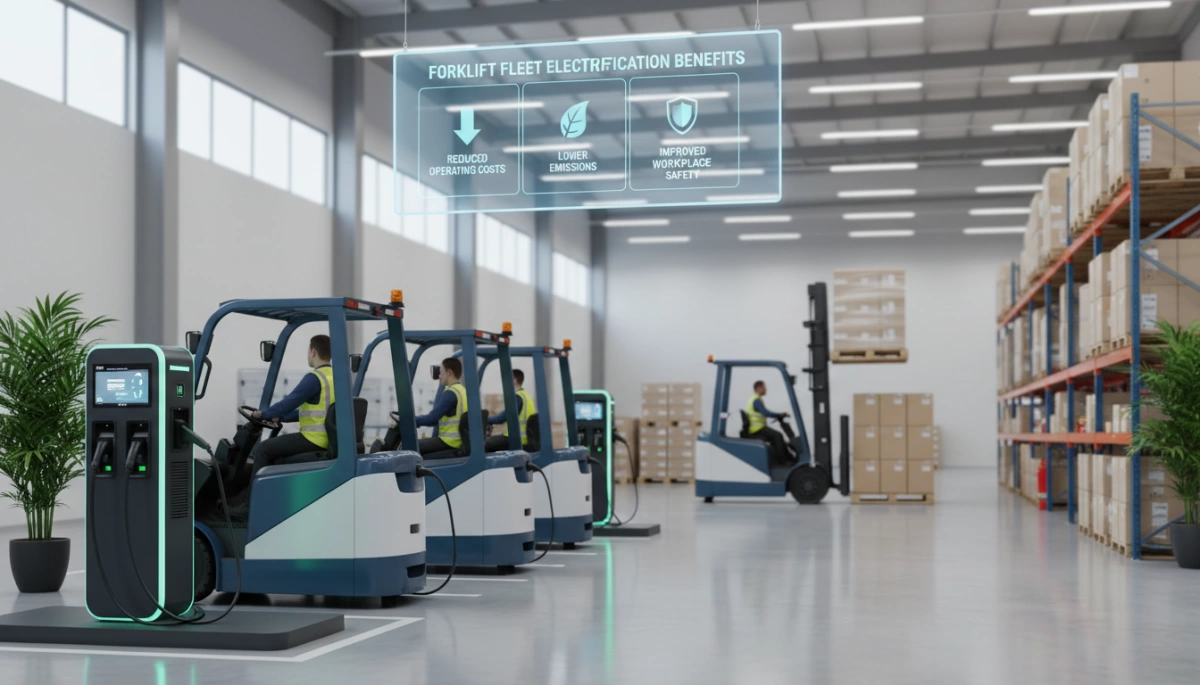
Lithium-ion forklift productivity gains per shift
With a fully electric forklift fleet, I see the biggest win in pure output per shift.
How lithium-ion forklift batteries boost productivity:
- Full power to the end of the shift – no sluggish lift or travel speed as the battery discharges
- Fast opportunity charging – top up during breaks instead of stopping for battery swaps
- No maintenance stops – no watering, no equalization, no acid checks
| Metric | Lead-acid Fleet | Lithium-ion Fleet |
|---|---|---|
| Power at end of shift | 60–70% | 95–100% |
| Typical charging pattern | 1 full charge/shift | Multiple short opportunity charges |
| Maintenance-related downtime | High | Very low (maintenance-free lithium) |
| Unplanned productivity loss | Frequent | Rare (with BMS monitoring) |
Fleet right-sizing and pallets moved per hour
When uptime improves, most sites can right-size the forklift fleet instead of just adding more trucks.
- More pallets moved per hour per truck thanks to consistent voltage and faster charge recovery
- Less idle equipment – fewer backup trucks parked “just in case”
- Better use of operators – no time wasted on battery swaps or searching for a charged unit
Typical outcome I see in multi-shift warehouses:
- 10–25% higher pallets moved per hour
- 1–3 trucks removed from over-sized fleets without losing capacity
Zero-emission forklift regulations and compliance
Regulation is tightening globally, especially for indoor and urban operations. Forklift fleet electrification with lithium helps you:
- Meet zero-emission forklift regulations and low-emission zone rules
- Replace aging internal combustion forklifts before bans force rushed decisions
- Avoid fuel storage permits, exhaust extraction, and emissions reporting headaches
For many customers, lithium-ion is the easiest route to long-term regulatory compliance and predictable operating costs.
Forklift fleet sustainability and ESG targets
Investors, customers, and large retailers now look closely at ESG scores and supply chain emissions. A lithium-powered forklift fleet directly supports:
- Lower Scope 1 and Scope 2 emissions (especially when paired with green electricity)
- Clear sustainability reporting – energy use, CO₂ per pallet moved, and efficiency metrics
- Stronger positioning in bids with large brands focused on green logistics
Many global customers use our lithium solutions to show tangible CO₂ reduction per warehouse in their ESG reports.
Environmental impact and indoor air quality improvements
Switching from internal combustion or lead-acid to lithium-ion forklift batteries has a visible impact on working conditions.
Key environmental and safety improvements:
- Zero tailpipe emissions – no diesel or LPG fumes indoors
- No acid spills or gassing – no dedicated battery room with complex ventilation
- Better indoor air quality, less dust attracted to oily exhaust residues
- Reduced noise pollution, which is a big plus for mixed-use or urban locations
If you’re focusing on clean, efficient material handling, pairing modern lithium forklift batteries with the right trucks and chargers from our industrial battery product range is one of the fastest ways to make your warehouse safer, greener, and more productive at the same time.
Implementation Guide for Forklift Fleet Electrification
1. Assess your current forklift fleet and duty cycles
Before buying anything, map how your forklifts actually work day to day:
- List every truck: model, age, hours, current battery or fuel type
- Track duty cycles: run hours per shift, lift height, load weight, breaks
- Flag multi‑shift forklift operations, cold storage, and high-intensity zones
- Identify top pain points: battery swaps, downtime, charging bottlenecks, emissions
This gives you a clear baseline for uptime, energy use, and total cost of ownership so you can size your lithium‑ion forklift batteries properly.
2. Choose lithium-ion forklift batteries and compatible trucks
Next, match batteries and trucks to real workloads, not brochure specs:
- Select voltage and capacity to cover a full shift with opportunity charging
- Make sure the BMS (battery management system) is compatible with your trucks
- Prioritize maintenance‑free lithium packs with strong OEM or aftermarket support
- For new trucks, choose models designed from the ground up for electric vs internal combustion forklifts
If you also run tow tractors, using the same lithium platform across trucks and 80V tow tractor batteries helps standardize parts and training.
3. Design charging infrastructure and power requirements
Good forklift charging infrastructure is what unlocks uptime and ROI:
- Plan charger locations near traffic flows, but out of the way of racks and docks
- Size site power and circuits for fast forklift battery charging speed
- Replace old lead-acid chargers with high‑efficiency lithium chargers where needed (lead-acid charger upgrades can be a bridge step)
- Build in room for expansion as you electrify more of your material handling fleet
Focus on easy park‑and‑plug workflows so drivers naturally opportunity charge during breaks.
4. Train operators and maintenance teams on lithium
Switching to lithium is simple, but training is non‑negotiable:
- Show drivers how and when to opportunity charge forklifts
- Set clear rules on safe charging, cable handling, and inspection
- Teach technicians basic BMS monitoring and diagnostics
- Emphasize that lithium is maintenance‑free vs watering and cleaning lead‑acid
Good training prevents misuse and protects your forklift battery uptime improvement.
5. Phased vs full electric forklift fleet transition
You don’t need to flip the whole fleet overnight:
- Phased transition: start with 1–2 high‑use sites or shifts, prove the lithium forklift ROI, then scale
- Full conversion: better for new facilities or when existing trucks are at end‑of‑life
I usually recommend phasing, starting with your worst‑performing or highest‑cost internal combustion or lead‑acid units. That’s where the forklift downtime reduction and savings show up fastest.
6. Work with lithium solution partners and suppliers
The right partner accelerates your electric forklift fleet transition:
- Choose suppliers with proven warehouse case studies and global support
- Demand clear lithium forklift ROI calculation and TCO models for your data
- Look for integrated offers: batteries, chargers, telematics, and service
A strong lithium partner will help with design, commissioning, and continuous warehouse forklift fleet optimization, not just sell you batteries and disappear.
How Much Electricity Does a Forklift Use? Energy Cost Calculator and Formulas
Lithium vs Lead-Acid Forklift Battery Cost in 2026: Total Cost Comparison