
How to Replace a Forklift Battery Step by Step
You can change a forklift battery safely if you follow clear steps. Always think about safety and use the right tools for lithium-ion or lead-acid batteries. XICHA gives good help for people with any skill level.
-
Doing each step helps you stay safe from things like explosions or fires.
-
Taking care of your forklift battery often helps it work well and stops accidents.
-
If you skip steps, you might have more risks and the battery may not work as well.
Key Takeaways
-
Always stay safe by wearing gloves and goggles when you work with forklift batteries.
-
Use the right tools and equipment to change the battery. This helps stop accidents and makes the job easier.
-
Check the battery fluid often and clean the terminals. This helps the battery last longer.
-
Read and follow the instructions from the manufacturer when you charge or move batteries. This keeps you safe and stops damage.
-
Take old batteries to recycling centers. This helps protect the environment.
Forklift Battery Safety
Safety Precautions
You need to follow safety steps before changing a forklift battery. Each battery type has its own dangers. Lead-acid batteries have sulfuric acid inside. This acid can hurt your skin and is poisonous. These batteries make gases that can explode when charging. You can get shocked if you touch high voltage parts. Old or rusty batteries might leak or get too hot, which is risky.
Lithium-ion batteries are closed tight. They do not leak acid. There is less chance of fire unless the battery gets broken. Special battery systems help stop problems.
Tip: Always charge batteries where air can move easily. This helps get rid of bad gases. Put up gas detectors and clear safety signs in charging areas. Keep the charging space clean and away from things that can burn.
Always follow what the battery maker says. Turn off the charger before you unplug the battery. Look at cords and connectors for damage before using them. If you see trouble, ask a trained expert for help.
Personal Protective Equipment
You must wear the right personal protective equipment (PPE) when working with a forklift battery. PPE keeps you safe from acid, shocks, and other dangers.
-
Wear safety goggles to keep your eyes safe.
-
Use gloves that block chemicals to protect your hands.
-
Put on a hard hat to keep your head safe.
-
Wear long sleeves and pants to cover your skin.
-
Keep a dry chemical, CO2, or foam fire extinguisher close.
-
Have baking soda ready to clean up acid spills.
-
Make sure you can reach an eyewash station and safety shower fast.
Note: XICHA says staff should train often. You need to know how to use PPE and what to do in emergencies. Take off dirty clothes right away if you touch acid. Wash your skin or eyes with cool water for 15 minutes.
You keep yourself and others safe when you use the right gear and follow safety rules.
Tools and Materials
Tools Checklist
You need the right tools to change a forklift battery. The tools you need can be different for each battery type. The voltage also matters. Here is a list to help you get ready:
-
Insulated hand tools like wrenches and screwdrivers
-
Voltmeter or multimeter
-
Battery lifting beam or battery cart
-
Safety goggles and gloves
-
Acid-resistant apron for lead-acid batteries
-
Cleaning supplies like baking soda, water, and rags
-
Cable ties and new connectors
-
Fire extinguisher with dry chemical or CO2
-
Eyewash station close by
|
Battery Voltage |
Special Tools Needed |
|---|---|
|
24V |
Standard lifting beam and voltmeter |
|
36V |
Heavy-duty lifting cart, multimeter |
|
48V |
Powered hoist and extra PPE |
Tip: Always look at the battery label for voltage. Follow the manufacturer’s instructions when you use tools.
Battery Handling Equipment
You must use the right equipment to move and put in batteries. Some batteries can weigh more than 1,000 pounds. Use a battery lifting beam, battery cart, or pallet jack with safety straps. Lithium-ion batteries are lighter than lead-acid batteries. You may not need heavy equipment for them.
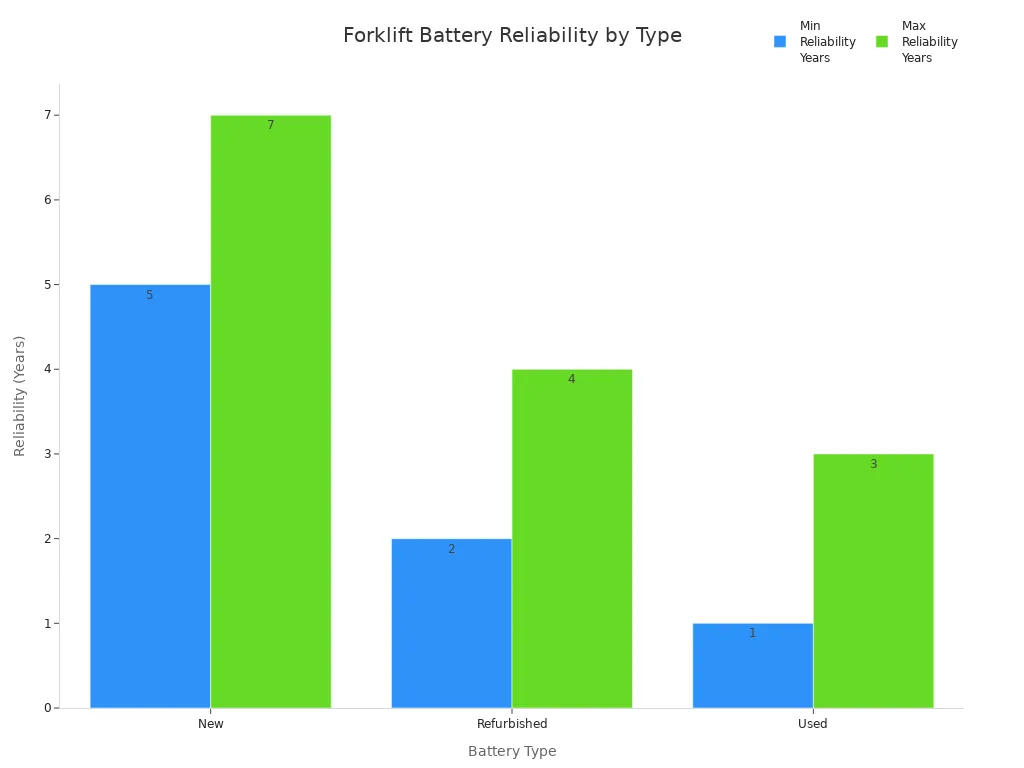
When you pick a replacement, you can choose new, reconditioned, or used batteries. Each one costs a different amount and lasts a different time. The table below shows how they are different:
|
Type of Battery |
Reliability Duration |
|
|---|---|---|
|
New |
Higher first cost |
Lasts 5-7 years |
|
Refurbished |
20-30% less than new |
Lasts 2-4 years |
|
Used |
Up to 30% cheaper than new |
Lasts 1-3 years |
You can buy good batteries from brands like XICHA, Loadhog, Stryten Energy, and EnerSys. These brands give strong warranty terms. Most warranties cover defects, battery management system problems, and cell issues. Warranty time is usually five to eight years or up to 12,000 hours. They do not cover misuse or damage you cause.
Note: New lithium-ion batteries last longer and charge faster than lead-acid batteries. Some models have smart battery management systems for better safety and longer life.
Battery Replacement Steps
Preparation
Get your forklift and workspace ready before you begin. Good preparation keeps you safe and makes the job easier.
-
Turn off the forklift and take out the key. This stops power from moving.
-
Make sure the forklift cannot roll away. Use wheel chocks if you need them.
-
Put on your personal protective equipment. Wear gloves, safety goggles, and steel toe shoes.
-
Unplug the charger from the forklift battery. Turn off the charger before you unplug it.
-
Collect your tools and lifting equipment. You might need a battery lifting beam, cart, or extractor system.
-
Pick a flat, steady area with good airflow. This helps stop accidents and keeps gases from building up.
-
Open the seat or battery cover so you can reach the battery.
-
If your forklift has a main switch or battery isolator, turn it off.
Tip: Always look at the battery label for voltage and type. This helps you choose the right tools and safety steps.
Disconnect Old Battery
You must disconnect the old forklift battery carefully to stay safe.
-
Always turn off the charger before you unplug the battery.
-
Gently unplug the battery connector. Do not pull the cables.
-
Take off the terminal cover if there is one.
-
Disconnect the negative terminal first. This lowers the chance of sparks.
-
Disconnect the positive terminal next.
Note: If you use a lithium-ion battery, you might see a smart connector or extra safety parts. Follow the manufacturer’s instructions for these pieces.
Remove Old Battery
Forklift batteries are very heavy. Use the right equipment so you do not get hurt.
-
Use a battery lifting beam, extractor system, or walkie pallet jack with a transfer carriage.
-
Make sure the battery stays flat as you lift it out.
-
Wear steel toe shoes to keep your feet safe.
-
Move the battery onto a cart or roller surface to carry it easily.
-
Store the old battery standing up in a cool, dry place away from sunlight and things that can catch fire.
|
Safety Measure |
Description |
|---|---|
|
Discharge Batteries |
Discharge lithium-ion batteries before disposal to lower fire risk. |
|
Safe Storage |
Store batteries upright in a place with air flow, away from heat and flames. |
|
Timely Recycling |
Recycle batteries quickly to help the environment and keep the workplace safe. |
Alert: Never tilt or drop a forklift battery. Spills or damage can cause fires or chemical leaks.
Install New Battery
Now you can put in the new forklift battery. Be careful so you do not break anything.
-
Make sure the new battery matches the voltage and type your forklift needs.
-
Use a lifting beam or cart to move the battery into place.
-
Keep the battery flat as you lower it into the compartment.
-
Connect the positive terminal first, then the negative terminal.
-
Secure the battery so it does not move while you use the forklift.
-
Close the seat or battery cover.
|
Feature |
Lead-Acid |
Lithium-Ion |
|---|---|---|
|
Weight |
Heavier |
Lighter |
|
Maintenance |
Needs watering |
Minimal maintenance |
|
Charging Time |
6–8 hours + cooling |
1–3 hours |
|
Lifespan |
About 1,500 cycles |
Over 3,000 cycles |
Tip: Lead-acid batteries need regular watering. Lithium-ion batteries do not. Always follow the care instructions for your battery type.
Final Checks
After you put in the new forklift battery, check that everything works right.
-
Start the forklift and see if it powers up.
-
Use a multimeter to check the voltage at the terminals.
-
For lead-acid batteries, check the fluid levels in each cell. Add water if needed, but do not add too much.
-
Make sure the charger works and gives the right voltage and current.
-
Look at all cables and connectors to see if they are tight and not damaged.
-
Write down your checks in a battery maintenance log.
Reminder: Checking your battery often and charging it the right way helps it last longer and work better.
Mistakes to Avoid
Common Errors
It is easy to make mistakes when you change a forklift battery. These mistakes can make the battery not last as long. They can also break the battery. You should learn about these mistakes before you start.
-
Charging the battery the wrong way can hurt it. Charging too much makes it too hot. Charging too little makes it weak. Charging too fast makes it wear out quicker.
-
Using a charger with the wrong voltage can break the battery. Always use a charger that matches the battery’s voltage.
-
Not having a charging plan can cause problems. You should have a set way to charge the battery.
-
Skipping equalization charges lets crystals form inside. These crystals make the battery work worse.
-
Watering mistakes are common. You might forget to add water or add too much. A broken watering system can also cause trouble.
-
Not fixing small problems can make them bigger. You should fix damage or rust as soon as you see it.
Tip: XICHA says to check all connections for rust, melting, or damage. Clean the terminals and fix cables before you put in a new battery.
Safety Hazards
You can get hurt if you do not follow the right steps. You must keep yourself and others safe when you change a battery.
-
If you forget to turn off the forklift or block the wheels, accidents can happen. Always turn off the forklift and use wheel chocks.
-
Not wearing gloves or goggles can lead to acid burns or shocks.
-
Using lead-acid batteries near fire or sparks can start a fire.
-
Lifting the battery without the right tools can hurt you. Use a battery beam or crane arm with a strong grip.
-
Lifting the battery at an angle can break it. Always keep the battery flat.
-
If you connect the terminals in the wrong order, you can make sparks. Connect the positive terminal first, then the negative.
|
Hazard |
How to Prevent It |
|---|---|
|
Acid burns |
Wear gloves and goggles |
|
Electric shock |
Switch off forklift, check connections |
|
Fire risk |
Avoid flames and sparks |
|
Physical injury |
Use proper lifting equipment |
Note: You lower risks when you follow XICHA’s advice. Always use the right tools, wear PPE, and check your work before you finish.
Forklift Battery Maintenance
Care Tips
You can help your forklift battery last longer by using easy care tips. Good habits stop problems and save you money.
-
Charge the battery only when you need to. Wait until the battery is at 20-30% before charging.
-
Always finish charging each time. This stops sulfation and keeps the battery strong.
-
For lead-acid batteries, check water levels often. Use only distilled water so you do not hurt the battery.
-
Keep the battery clean. Dirt and rust can make it work worse.
-
Plan regular equalization charges for lead-acid batteries. This keeps the voltage even and helps the battery last longer.
-
Make sure the battery stays at a safe temperature. Give it good airflow and keep it away from very hot or cold places.
?️ If you do not follow these steps, you might get problems like sulfation, acid layers, or rust. These problems can make the battery stop working and cost you more to fix.
Inspection and Cleaning
Checking and cleaning your battery often helps you find problems early. You should look at your forklift battery a lot to keep it safe and working well.
|
Maintenance Task |
|
|---|---|
|
Daily |
Look for damage, rust, and check fluid levels |
|
Weekly |
Clean terminals, check water (lead-acid), look at connections |
|
Monthly |
Check voltage and specific gravity |
|
Quarterly |
Check maintenance logs, reset battery management system |
|
Annually |
Check charger, deep clean battery if needed |
-
Look at the battery terminals every week. Clean them so the battery works well.
-
Check water levels in lead-acid batteries. Add distilled water if you need to.
-
Do not let the battery get too hot. Heat can break parts and make leaks.
-
Keep a log of maintenance. Write down every time you check or clean the battery.
XICHA gives regular maintenance help, technical support, and replacement plans. You can use these to keep your battery working well and lower safety risks.
If you do not take care of your battery, you might have less work done, more repairs, and more safety problems. Taking care of your forklift battery helps your warehouse work better.
You can change a forklift battery safely if you do these things:
-
Charge the battery when it goes below 30%. Always finish charging it.
-
Equalize the batteries often so they stay strong.
-
Look at and clean the terminals to stop rust.
-
Check water and fluid levels to help the battery work well.
-
Keep batteries cool and away from heat.
|
Safety Practice |
Description |
|---|---|
|
Personal Protective Equipment |
Wear PPE to keep yourself safe when you change or throw away batteries. |
|
Proper Ventilation |
Make sure air moves well to lower gas risks, especially for lead-acid batteries. |
|
Secure Battery Connections |
Check that terminals and cables are tight and clean. |
|
Benefit |
Description |
|---|---|
|
Consistent Power Delivery |
Your forklift works without stopping. |
|
Extended Lifespan |
|
|
Improved Safety |
Fewer problems help keep you safe. |
|
Reduced Downtime |
Checking early helps you stop problems before they start. |
Checking your battery often and taking care of it helps you work safely and well. XICHA gives expert help and strong batteries. Always put safety and battery care first. ?
FAQ
How often should you replace a forklift battery?
You should get a new forklift battery every 5 to 7 years if it is new. Used or refurbished batteries last only 1 to 4 years. Check how well your battery works and listen to what the maker says.
What signs show your forklift battery needs replacing?
Watch for slow charging or if the battery runs out fast. Leaking fluid or a swollen battery case are bad signs. Rust or a strong smell also mean you may need a new battery. Always check your battery often.
Can you mix different battery brands in one forklift?
Do not use different battery brands in one forklift. Each battery has its own voltage and chemistry. Mixing brands can break your battery and is not safe. Always use batteries that fit your forklift.
Do lithium-ion batteries need watering like lead-acid batteries?
You do not need to add water to lithium-ion batteries. Lead-acid batteries need water checks and distilled water. Lithium-ion batteries save you time and need less care.
What should you do with old forklift batteries?
Take old forklift batteries to a recycling center. Never put them in the trash. Recycling helps the earth and keeps you safe.
Forklift Battery at 80 Percent Capacity: Repair, Replace, or Keep Using?
How to Care for Your Lead Acid Battery for Forklift