How to Choose the Right Battery for a Semi-Electric Stacker
Surprising fact: I learned that equipment downtime tied to charging schedules can cut productive hours by nearly 30% in some warehouses, a hit that often outweighs the sticker price.
I treat this purchase as an operations decision, not just a cost decision. Uptime, labor, and shift planning matter as much as the upfront price.
In this guide I compare maintenance, charge time, performance consistency, space, safety, and total cost of ownership for a semi-electric stacker battery in a U.S. warehouse. I’ll explain why the chemistry choice is often a tradeoff between lower initial cost and easier day-to-day operation.
Expect clear facts: traditional units need long charge and cool windows that change planning, while modern chemistries often allow fast and opportunity charging and give longer cycle life. I’ll start with compatibility (voltage and capacity) so you don’t order the wrong forklift battery for your charger.

Key Takeaways
- Buy for uptime: charging and cooling affect schedules as much as price.
- I compare maintenance, charge time, performance, space, safety, and TCO.
- One chemistry trades lower cost for added operational steps.
- Fast charging and opportunity charging reduce downtime.
- Check voltage and capacity compatibility before chemistry.
What I look at first when choosing a semi-electric stacker battery for my warehouse
I start by charting the real-world rhythm of our operations and staff shifts.
My operating pattern drives everything. If I run a single shift, a traditional charge cycle can fit neatly into downtime. In multi-shift or 24/7 use, that same cycle forces extra change-outs or spare packs and adds labor
A spacious warehouse interior showcasing efficient operations with various semi-electric stackers in action. In the foreground, a semi-electric stacker branded "XICHA" is lifting a battery pack, with a worker in professional business attire carefully examining it, emphasizing proper battery selection. The middle ground features shelves stocked with batteries and packages, along with additional stackers maneuvering through the aisles. The background displays high ceilings with industrial lighting casting a bright, clear ambiance, enhancing the focus on the operations. The scene captures a sense of productivity and organization, inviting viewers into the meticulous world of warehouse battery management. Shot with a wide-angle lens to encompass the scale and activity of the warehouse, creating an engaging and informative illustration.
How I map use and needs
I ask a few simple questions: how many lifts per hour, how long each run lasts, and can operators plug in during breaks?
- I estimate "hours of coverage" per device and compare that to shift length.
- I weigh run time needs against realistic charge windows and human behavior.
Compatibility checks before comparing chemistries
Before chemistry, I verify voltage match, physical fit, connector type, and charger compatibility. This avoids costly returns or retrofits.
| Check | Why it matters | Action I take |
| Voltage | Mismatched voltage can damage the system | Confirm specs on the forklift and charger |
| Physical fit | Tray and weight affect handling | Measure cavity and test fit before ordering |
| Connector & charger | Incompatible plugs stop charging | Match connectors and verify charger firmware |
Next, I’ll show a quick side-by-side that ties these checks back to real shift patterns and staffing reality.
lithium vs lead acid battery,semi-electric stacker battery: the quick side-by-side
I lay out a quick, side-by-side snapshot so you can see operational tradeoffs at a glance. This helps you match uptime, labor, and cost to your shift pattern before diving deeper.

A detailed and focused close-up image of a sleek, modern lithium-ion battery branded "XICHA," positioned prominently in the foreground. The battery features smooth metallic sides and clear labeling, showcasing its technical specifications. In the middle ground, a semi-electric stacker is partially visible, highlighting its compatibility with the battery, surrounded by a soft, diffused lighting that emphasizes its high-tech design. The background presents a softly blurred industrial warehouse setting, creating an atmosphere of innovation and efficiency. The composition captures a professional and informative mood, ideal for educational purposes. The scene should have a slight depth of field effect, creating focus on the battery while keeping the stacker and warehouse subtly in view. No text or watermarks should be included in the image.
Maintenance
Lead-acid batteries need regular watering, cleaning, and corrosion checks. That creates recurring labor and training needs.
Lithium-ion batteries require near-zero upkeep beyond checking plugs, cables, and chargers. Fewer daily tasks mean less downtime for inspections.
Charging
Traditional packs typically need about an 8-hour charge plus roughly 8 hours to cool down before reuse.
The modern packs usually charge in 1–4 hours and allow opportunity charging during breaks, cutting planned downtime.
Lifespan and cycles
Lead-acid packs average around 1,500 cycles. In single-shift use that can mean several years; in multi-shift it shortens notably.
Lithium-ion often reaches 2,000–3,000 cycles, which translates into more years of reliable power and fewer replacements.
Cost and ROI
Upfront cost for lead-acid runs roughly $5,000–$12,000. The newer packs sit around $17,000–$25,000.
But, higher initial spend can yield significant energy savings—as much as ~50%—and lower labor and downtime that improve total cost of ownership.
- I give you the tradeoffs: maintenance, charging habits, cycles, lifespan, and real cost impact.
- Next, I’ll dig into daily maintenance and how it affects staffing and uptime.
Maintenance and daily labor: what I’ll actually need to do to keep batteries running
Daily care for power packs is where I see most hidden costs and failures. I lay out the routine tasks I commit to and how they affect my team and uptime.
Lead-acid batteries demand regular watering to keep electrolyte levels correct. I schedule checks after charging and document levels so cells stay balanced.
I also clean terminals and trays to prevent acid residue and corrosion. Those chores need training and strict accountability across shifts.
A well-lit, focused photograph of a professional technician in a safety vest, meticulously inspecting maintenance lead-acid batteries in a semi-electric stacker. In the foreground, the technician is shown examining battery terminals with a multimeter in hand, showcasing attention to detail. The middle ground features the stacker with its battery compartment open, revealing several lead-acid batteries with visible labels and warning signs. In the background, a clean, organized warehouse setting is depicted, with soft ambient lighting highlighting the tools and equipment essential for battery maintenance. The mood conveys professionalism and diligence, emphasizing the importance of daily labor in ensuring battery longevity. The brand name "XICHA" is subtly displayed on the stacker.
What I do for modern packs
Lithium-ion batteries remove watering and acid cleanup from the list. My routine is visual checks: connectors, cables, and charger status.
I still avoid deep discharges and log charger errors to protect long-term performance.
How maintenance changes operations
More hands-on upkeep increases variability and unplanned downtime. When staff are thin, those chores compete with picking and shipping.
The advantage of fewer manual steps is clearer uptime and more consistent performance across my shifts.
Charging time, downtime, and scheduling in real operations
I map when a machine is parked, plugged, and actually able to move pallets so charging specs become an operational plan, not a guess.
Lead-acid charging reality
In practice, traditional packs take about 8 hours to charge and need roughly 8 more hours to cool. That creates a practical block of ~16 hours off the floor.
This matters: even after a full charge the unit may not be ready for immediate redeployment. I often plan swaps or keep a spare pack when running more than one shift.
Lithium-ion charging reality
Modern packs typically reach a full charge in 1–4 hours and require no cooldown. Shorter charge windows mean I rarely need spare packs for multi-shift use.
The advantage is simpler scheduling and higher uptime because the system can return to service quickly.
Opportunity charging: how I use breaks to keep a stacker available
Opportunity charging is a practical trick I enforce: operators plug in during breaks, swap brief charges at shift changes, and top up during lunch. Those short plugs add up to big uptime gains.
- I plan charge points so operators plug in fast and avoid congestion.
- I schedule chargers away from high-traffic aisles for safety and flow.
- I track actual hours on equipment to decide if swaps or more chargers are needed.
Bottom line: charging choices drive downtime, staffing needs, and throughput. I set rules that match charge time to real shifts so forklifts stay where they do the most work.
Performance and efficiency: power delivery, run time, and energy losses
What I track most closely is usable run time and how steadily a pack delivers power under load. That practical view separates rated capacity from what moves product every hour.
Voltage sag and end-of-shift effects
Voltage sag reduces lift speed and drive response as state of charge falls. I see forklifts slow and operators compensate with extra cycles when output drops.
This less predictable performance raises labor minutes per pallet and makes scheduling harder.
Energy efficiency in real terms
Some chemistries deliver steadier voltage and better conversion from grid energy to usable work. In my facilities that often translates to lower energy bills and fewer mid-shift swaps.
As a planning benchmark, I use the "up to about 50% energy savings" figure to model ROI, while noting actual savings depend on charging habits and electricity rates.
Temperature, placement, and practical limits
Cold and hot environments reduce capacity for all packs, so I plan conservatively in chilled areas. I also factor ventilation and gassing limits for flooded types.
The net effect is clearer throughput and fewer surprises when power delivery is consistent. That predictability is often the biggest operational gain I count toward ROI.
"Consistent power beats a long-but-falling charge when shipping deadlines matter."
Cost and ROI: comparing price tags to total cost of ownership
I run the numbers to compare sticker price against what I’ll actually spend over the life of the pack. Upfront cost is only the start. I always add labor, chargers, and replacement timing into the model.
Upfront cost ranges
I list typical U.S. prices: traditional packs come in around $5,000–$12,000. Modern chemistry units typically sit near $17,000–$25,000.
Battery life math
I calculate expected years by dividing cycle life by my daily cycles. Typical cycle counts are ~1,500 for the older technology and roughly 2,000–3,000 for the newer packs.
Where I see payback
Faster charging and reduced maintenance cut labor and downtime. That often yields energy and time savings that offset higher initial cost over several years.
When the lower-cost option still wins
If capital is tight, you run a single shift, or long charge windows are acceptable, the lower sticker price can be the right choice.
- I price the whole system: pack, charger, and any facility work.
- I model savings as reduced labor, fewer swaps, and less lost run time.
| Metric | Lower-cost packs | Modern packs | My practical note |
| Upfront cost (USD) | $5,000–$12,000 | $17,000–$25,000 | Budget vs long-term spend |
| Typical cycles | ~1,500 | 2,000–3,000 | Translate to years using daily cycles |
| Main savings | Lower initial outlay | Labor, downtime, and energy | Pick based on shifts and cash flow |
"The right choice supports throughput and labor planning without unexpected operational drag."
Space, safety, and handling: the practical constraints I plan for
I always assess how much usable square footage charging needs will take from my operations. This shapes whether I build a dedicated charging room or free floor space for staging and travel.
Charging space and size tradeoffs
Dedicated charging areas protect operations but use valuable space. If I must keep aisles clear, a separate room adds walls, ventilation, and drains.
Simpler packs let me reclaim floor space for pallets and staging. That reduced footprint often improves flow and lowers the cost of facility changes.
Safety and compliance in plain terms
I plan for spill risk and hazardous material handling when cells contain corrosive fluids. Wet change-outs raise exposure risks for operators and nearby products.
In product-sensitive environments like food or pharma, I enforce stricter controls or choose solutions that reduce spill potential.
Weight and handling realities
Heavier packs can weigh 800–4,000 lbs and need lifts or carts for safe swaps. That adds equipment, training, and time to each change.
Lighter packs (about 500–2,500 lbs) simplify handling and often remove the need for a separate charging room.
- I track end-of-life plans: mature recycling streams recover roughly 80% of materials for older chemistries.
- Fewer incidents and less lost space feed directly into ROI through smoother daily throughput.
My decision framework: which battery type I recommend based on your use case
I choose equipment by matching real work patterns to what a power pack can reliably deliver. That starts with a clear goal: keep forklifts moving with the least operational friction.
When I choose lithium-ion batteries for a semi-electric stacker
I pick lithium-ion batteries when my site runs multiple shifts, needs fast charging windows, and cannot tolerate extended downtime.
These packs support opportunity charging, cut routine maintenance, and deliver steady power under load. For me, the gains in efficiency and uptime justify higher initial cost when throughput matters.
When I choose lead-acid forklift batteries for a semi-electric stacker
I pick lead-acid forklift batteries when operations are single-shift or intermittent and capital is tight.
This type works if your team can manage watering, inspections, and scheduled long charges. Upfront cost is lower, but you accept more maintenance and longer downtime windows.
The checklist I use to validate the choice before I buy
- Confirm the chosen type and voltage match the forklift and charger.
- Verify charger compatibility and electrical supply capacity.
- Estimate expected discharge per shift; use a BDI to log real patterns.
- Confirm available charging points and operator willingness to opportunity charge.
- Document safety procedures and handling for swaps or fixed charging areas.
- Sanity-check total system fit: pack, charger, wiring, and operator flow.
My rule: pick the solution that meets throughput goals with the least added process or downtime. The right type is the one that fits your warehouse, your staff, and your operations plan.
"The best choice meets throughput goals with the least operational friction."
Conclusion
My bottom line is simple: choose the pack that keeps your operation moving with the least friction. strong.
If uptime and predictable labor matter most, I favor the modern option. lithium vs lead acid battery research shows that lithium-ion batteries deliver faster charging (1–4 hours), near-zero routine maintenance, and steadier performance through a shift.
If upfront cost and single-shift use rule, lead-acid batteries still make sense. The lower purchase price can fit tight budgets when long charge and watering windows are acceptable.
Before you buy, match voltage and capacity, confirm charger compatibility, and verify your space and safety setup. The right forklift battery is the one that fits your schedule, staff, and total cost over the full lifecycle.
FAQ
How do I choose the right power source for a semi-electric stacker?
What operating pattern changes my selection the most?
How do I confirm voltage, capacity, and compatibility before comparing chemistries?
What are the real maintenance differences between technologies?
How do charging needs compare in practice?
What about lifespan and cycle counts?
How does maintenance affect uptime and staffing?
How should I schedule charging to minimize downtime?
What performance differences will I notice during a shift?
Can I save energy and operating costs with the newer chemistry?
How do cold and hot environments affect performance?
How do upfront costs compare to total cost of ownership?
When does the lower-cost option still make sense?
What space and safety issues should I plan for?
How do weight and handling affect installation and service?
When do I recommend the newer technology for a semi-electric stacker?
When do I still choose traditional power for a semi-electric stacker?
What checklist do I use to validate a final purchase?
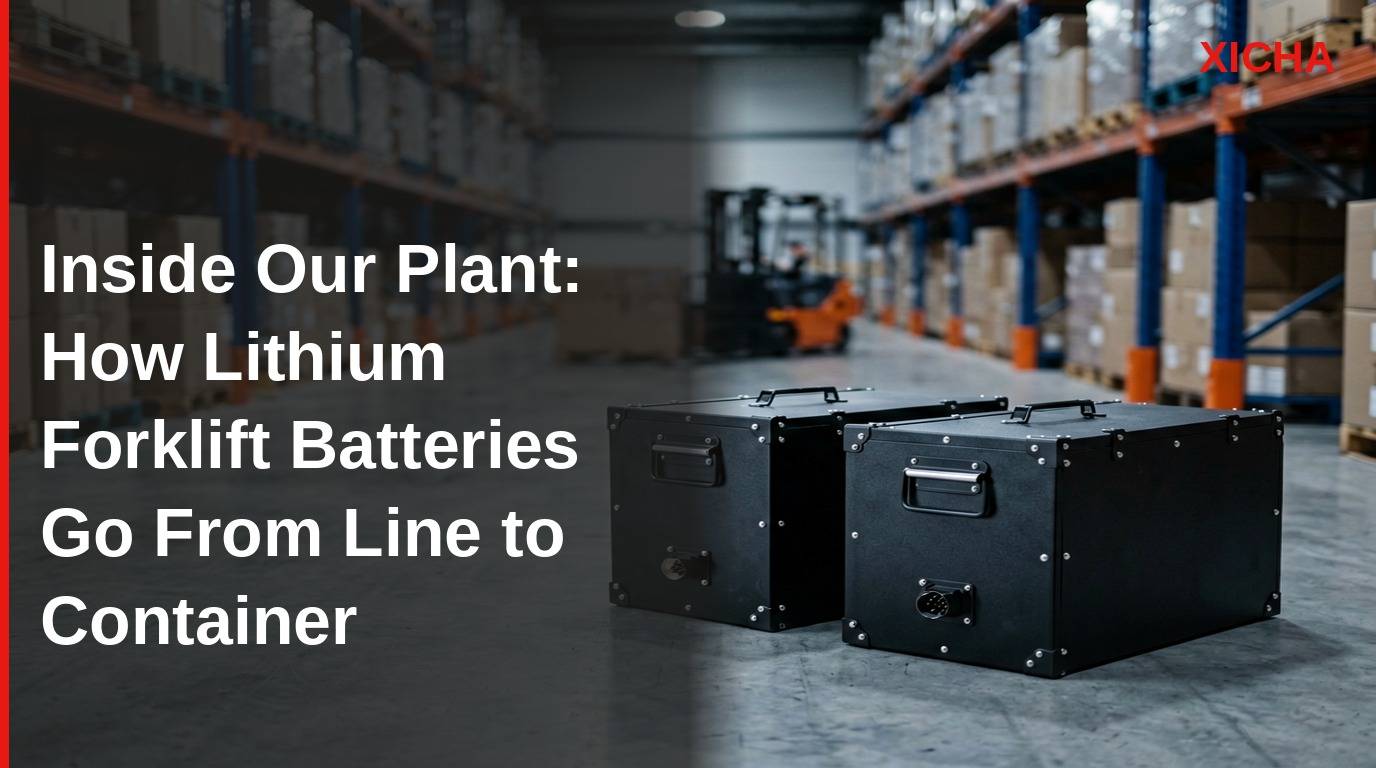
Inside Our Plant: How Lithium Forklift Batteries Go From Line to Container
Lithium Forklift Clients Case- Increased Uptime and Savings
Related Article